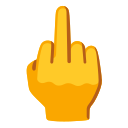
🖕 shows a hand with the middle finger extended, and it carries the same meaning as the real gesture: a blunt insult or expression of anger. English speakers call it “the finger,” “the bird” or “flipping someone off.” Variants of the gesture were already considered rude in ancient Rome, where it was known by a Latin name meaning roughly “shameless finger.” As an emoji it was standardized around 2014 in Unicode 7.0, under the official name “reversed hand with middle finger extended.”
How it’s used
- Playful defiance among friends: “Monday again? 🖕” aimed at the situation, not a person
- Real anger: reacting to a rude driver, a bad decision or a company that wronged you
- Teasing a close friend who will take it as a joke
- Quoting or describing the gesture in news and commentary
Pointed at a person, it is an attack. It is much blunter than 😡 (enraged face), 🤬 (face with symbols on mouth) or 👎 (thumbs down), which show anger without a direct insult.
Korea, Japan and the English-speaking world
In English it is one of the most universally understood insults, and it is easy to find in road-rage stories and protest photos. On social media it appears in both genuine hostility and rowdy banter among friends, so context is everything. Many workplaces, schools and online communities forbid it, and some platforms limit or filter it.
In Korea the gesture arrived with Western culture and is understood as a swear sign. It is considered rude toward elders, coworkers and strangers, and friends who use it jokingly usually check the mood first. The Korean name is simply 중지 (middle finger) or 가운뎃손가락.
In Japan it is called 立てた中指, literally “raised middle finger.” It is known mainly through films and Western pop culture and is less common in daily talk than in English, but the meaning is widely recognized as an insult and it is almost never sent to someone you are not close to.
Where it gets misread
- A joke that you meant as friendly can still land as an insult. Unless you know the person very well, skip it.
- At work, at school or with customers it is flatly inappropriate, and one message can cost a relationship or a job.
- It is not a worldwide symbol of the same strength. Some regions treat the gesture more lightly and others use different rude gestures, so be careful with people from other cultures.
- The skin-tone options do not soften the message; choosing a shade changes the hand, not the meaning.
Design differences by platform
Apple, Google’s Noto, Microsoft’s Fluent and Samsung all draw a hand seen from the back with only the middle finger raised. They differ in skin texture, shading and how realistic or cartoonish the hand looks, but the meaning is identical everywhere. Some apps and services hide, replace or restrict the emoji, so the recipient may see it differently from how you sent it.